Learner Profile Series: How to Teach Students to Be Open-Minded
Open-mindedness is one of those Learner Profile traits that sounds simple… until you actually try to teach it.
Yes, students can recite the definition, but being open-minded means far more than “listening politely.” In the IB framework, it’s about valuing different cultures, perspectives, and experiences, and being willing to grow because of them.
In today’s classrooms, where students are navigating cultural differences, social media, identity, and global issues, open-mindedness is a life skill.
Here’s how this Open-Minded MYP lesson turns that idea into meaningful learning.
Start with students’ own cultures
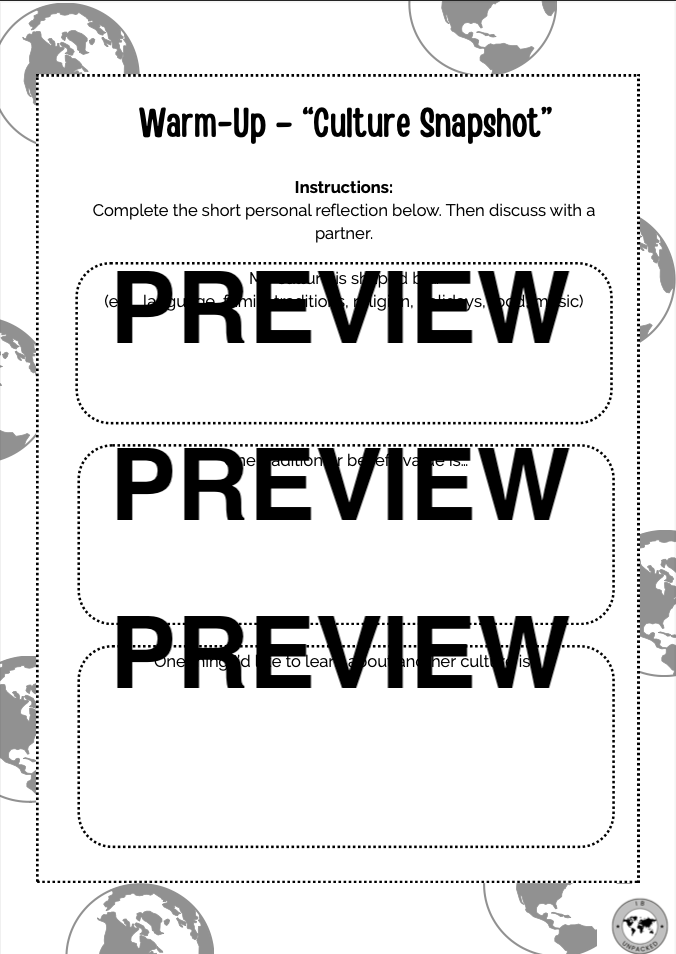
The lesson begins with a warm-up called “Culture Snapshot.” Students reflect on what shapes their identity. From food and family traditions to language, religion, and music, and then share one thing they’d like to learn about another culture
This small activity does something powerful:
It helps students see that everyone has a culture, and everyone’s story matters.
Instead of “us vs. them,” the classroom starts with curiosity.
Connect behaviours to open-minded thinking
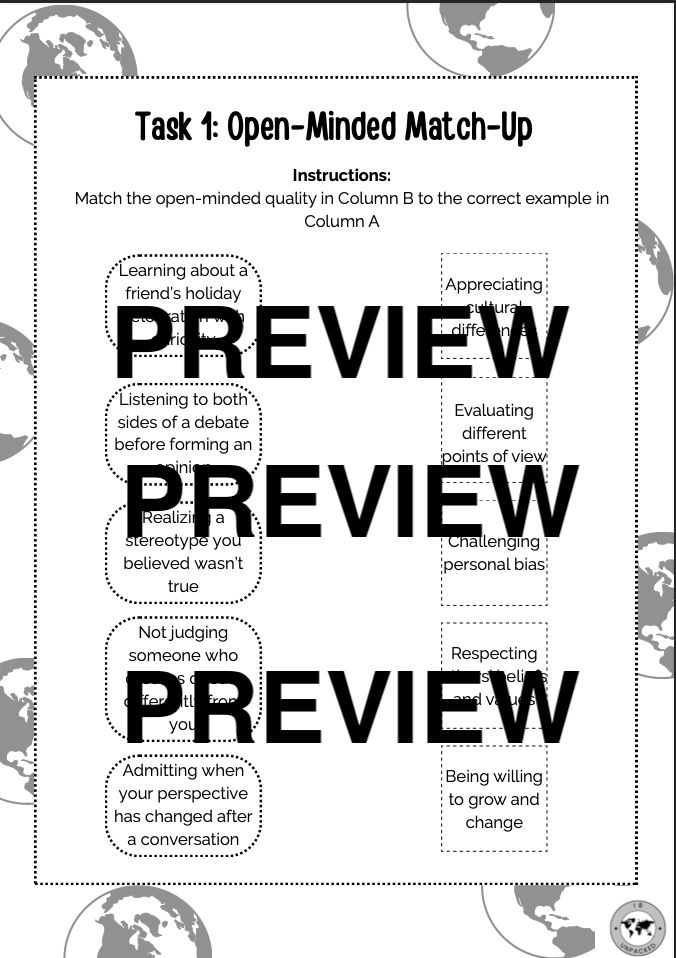
In Task 1, students match real-world behaviours with open-minded qualities like:
evaluating different points of view
challenging personal bias
respecting others’ beliefs
being willing to grow and change
Examples include:
listening to both sides of a debate
realizing a stereotype wasn’t true
learning about a friend’s holiday with curiosity
This makes it clear that being open-minded isn’t abstract, but it shows up in everyday conversations, friendships, and choices.
Use powerful storytelling to challenge assumptions
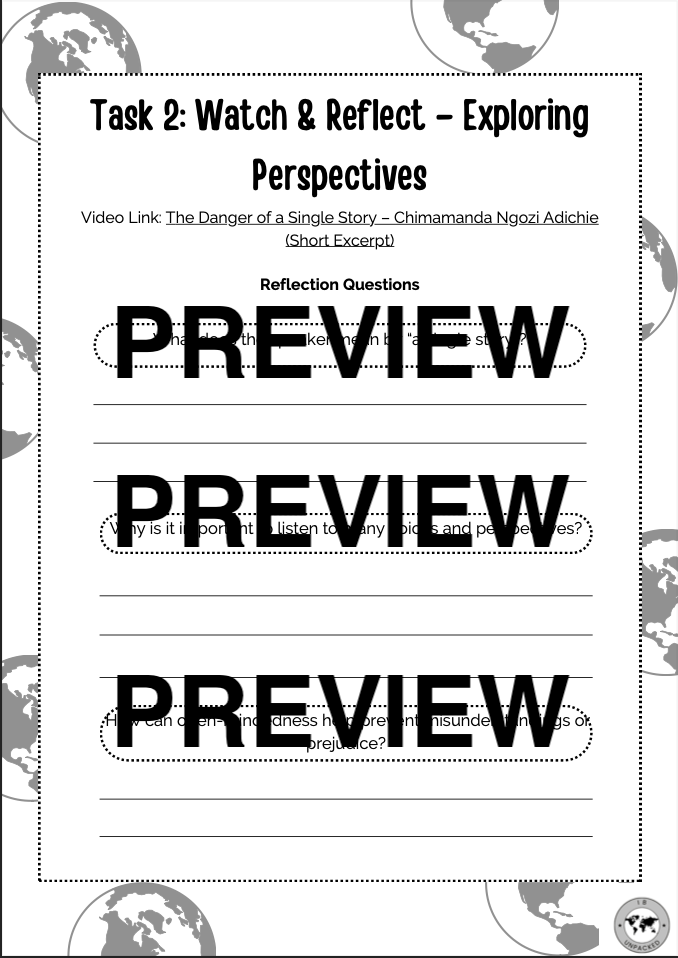
Students then watch a short excerpt from Chimamanda Ngozi Adichie’s “The Danger of a Single Story” and respond to guided questions about perspective, bias, and why hearing many voices matters.
This is where the learning deepens.
Students start to realise how easily we form assumptions, and how open-mindedness helps prevent prejudice, misunderstandings, and oversimplified thinking.
Compare cultures to build global awareness
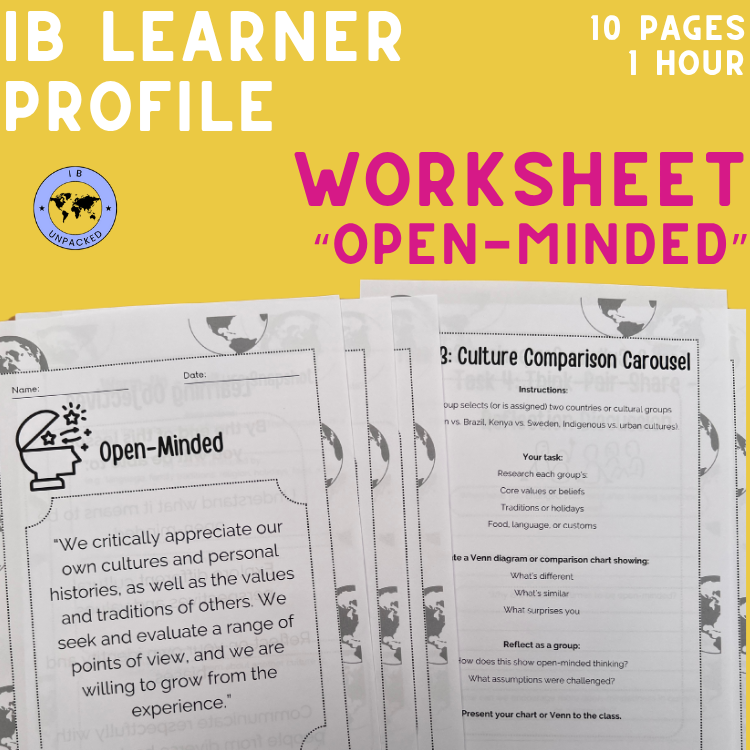
One of the most engaging parts of this lesson is the Culture Comparison Carousel.
Students compare two cultural groups (for example, Japan vs. Brazil or Indigenous vs. urban cultures) by researching values, traditions, food, and customs, then organizing what’s similar and different in a Venn diagram or chart.
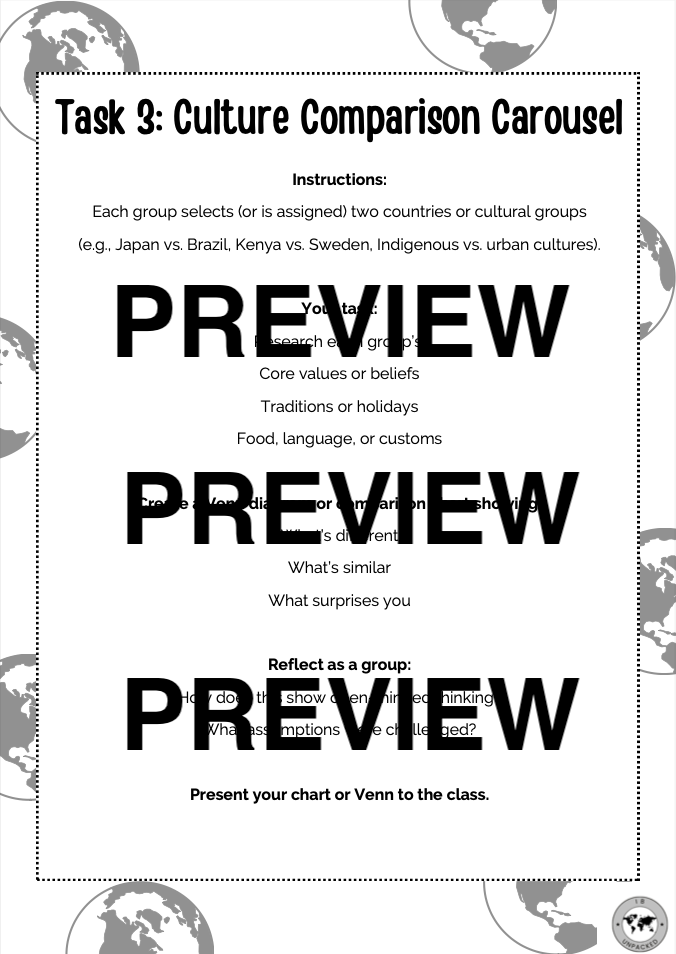
They also reflect on:
what surprised them
which assumptions were challenged
how the activity showed open-minded thinking
This moves students from “learning about” cultures to respecting and appreciating them.
Make open-mindedness personal
The Think-Pair-Share reflection asks students:
When have you changed your mind after hearing someone else’s view?
Why is it sometimes hard to be open-minded?
How can we encourage more open-mindedness in our school or community?
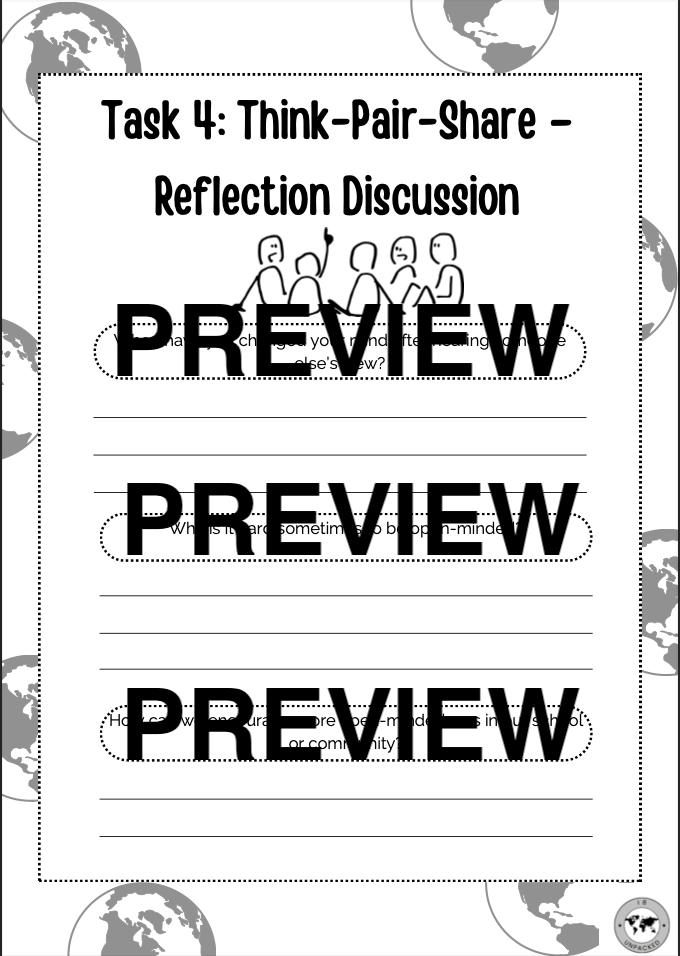
These questions help students see that being open-minded is a choice, especially when it feels uncomfortable.
Build empathy through perspective-taking
For homework or extension, students complete a Perspective Walk, imagining a day in the life of someone very different from them — based on culture, gender identity, ability, language, or socioeconomic background.
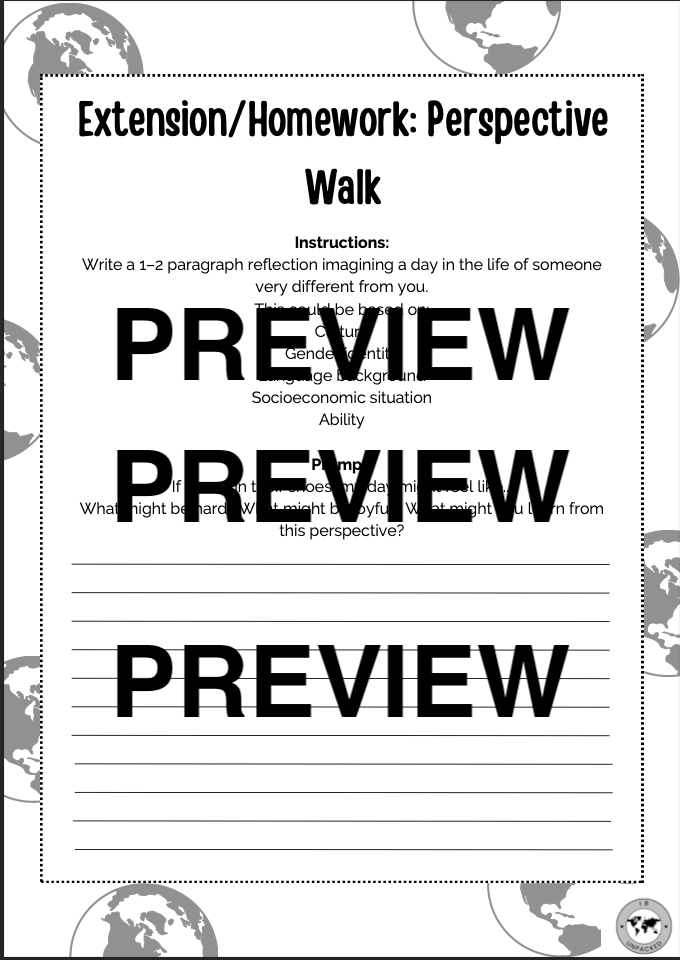
This is where empathy really takes root.
By stepping into someone else’s shoes, students don’t just understand difference — they feel it.
End with reflection and growth
The lesson closes with a self-assessment where students rate how open-minded they are in areas like:
listening to different views
challenging assumptions
respecting dignity
being willing to grow and change
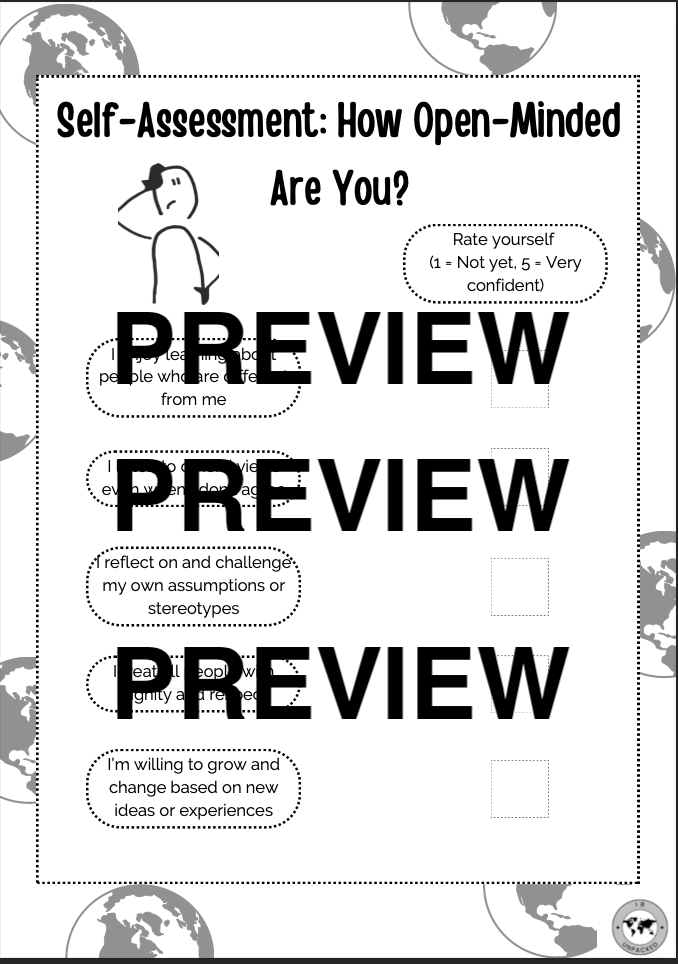
This turns open-mindedness into a growth goal, not a label.
Want to use this lesson with your students?
This resource is perfect for:
MYP advisory or homeroom
PSHE and SEL
global citizenship
Learner Profile or ATL units
It doesn’t just teach students to tolerate difference, but it teaches them to value it.
And in a world that desperately needs empathy, curiosity, and understanding, that’s exactly what open-minded learning should do.
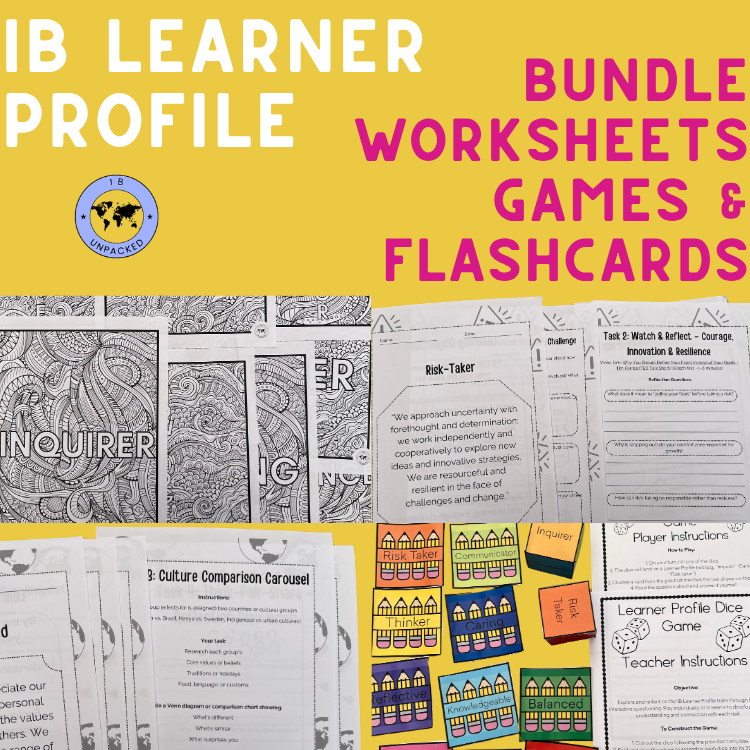
You can also purchase lessons for the other 9 Learner Profile traits, as well as a flashcards, MYP-friendly coloring, and a dice game here: