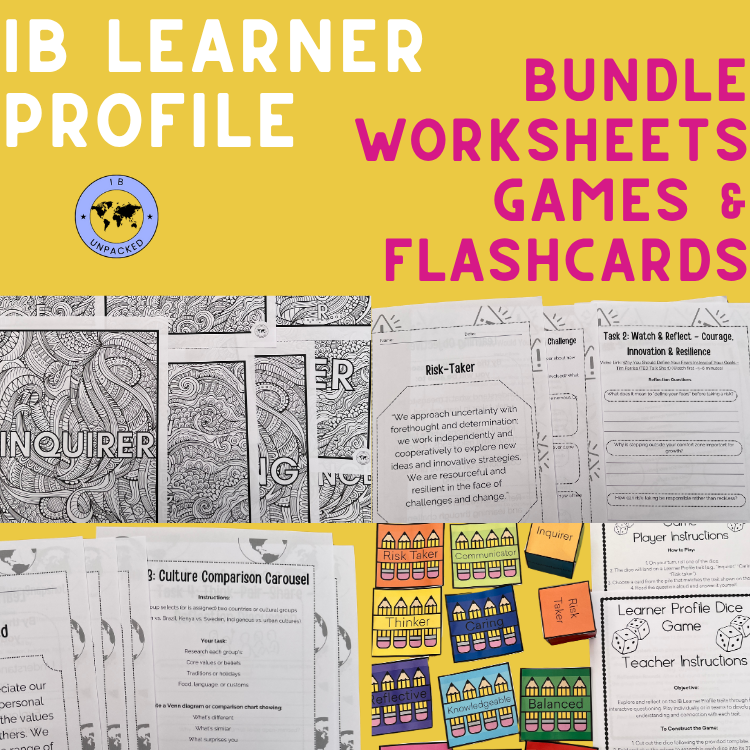
Learner Profile Series: How to Teach Students to Be Knowledgeable
When students hear the word knowledgeable, many assume it simply means “being smart” or “knowing lots of facts.”
But in the IB Learner Profile, being knowledgeable goes far beyond memorization. It’s about developing conceptual understanding, connecting learning across subjects, and engaging with real-world issues that matter both locally and globally.
In other words, it’s about helping students see the big picture.
Here’s how this Knowledgeable MYP lesson brings that idea to life in an engaging, student-centered way.
Start with big ideas, not worksheets
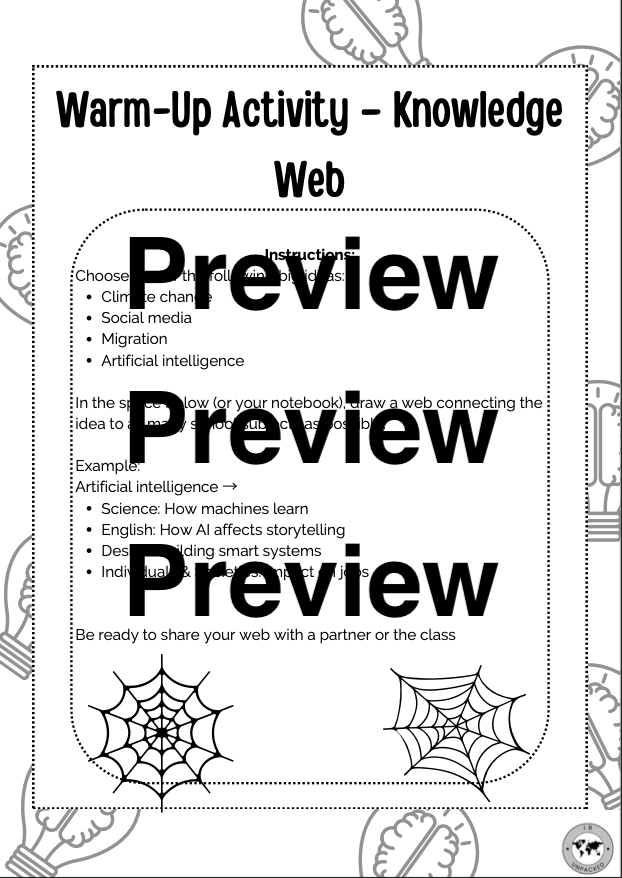
The lesson opens with a Knowledge Web activity where students choose a big concept like:
climate change
social media
migration
artificial intelligence
Then they map how that topic connects across different subjects such as science, English, design, and Individuals & Societies.
Almost instantly, students realize:
“Wait… everything connects.”
And that’s the heart of being knowledgeable.
Instead of seeing subjects in isolation, they begin to understand how knowledge works together to explain the real world.
Define what “knowledgeable” really looks like
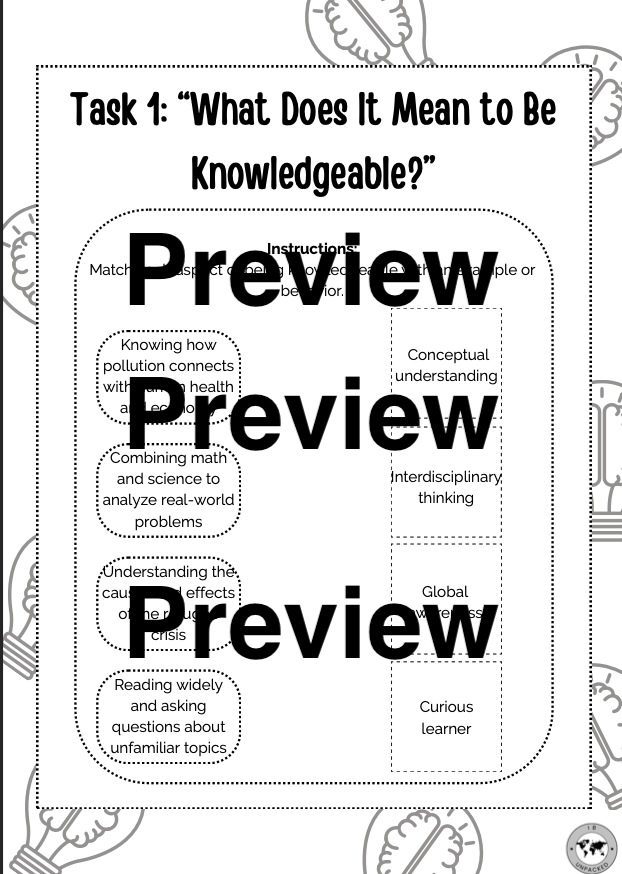
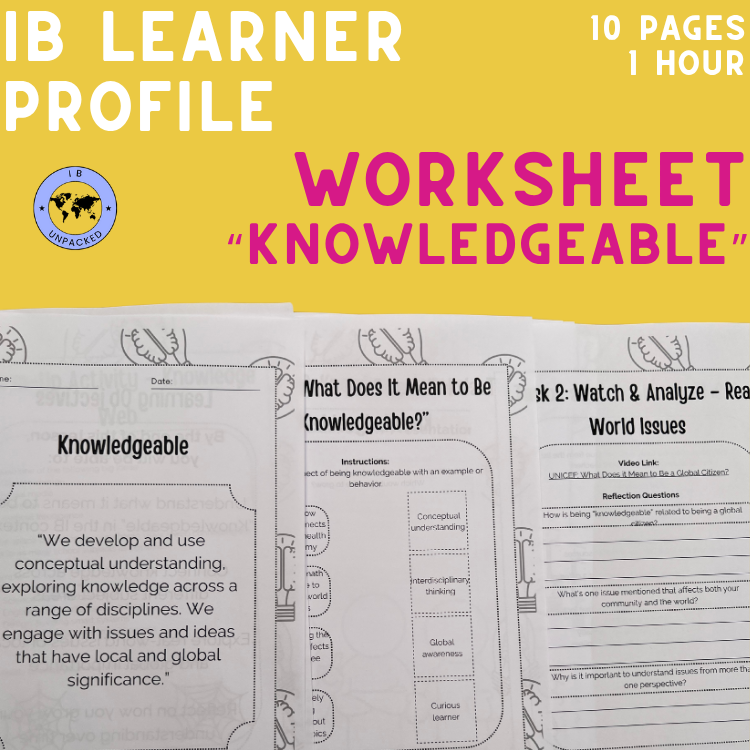
Next, students explore different aspects of being knowledgeable, including:
conceptual understanding
interdisciplinary thinking
global awareness
curiosity and questioning
They match each quality to real-life examples, such as combining math and science to solve problems or understanding the causes and effects of global issues like migration and pollution.
This makes the trait practical rather than theoretical.
Students start seeing that being knowledgeable is something you do, not just something you are.
Rethink how learning actually happens
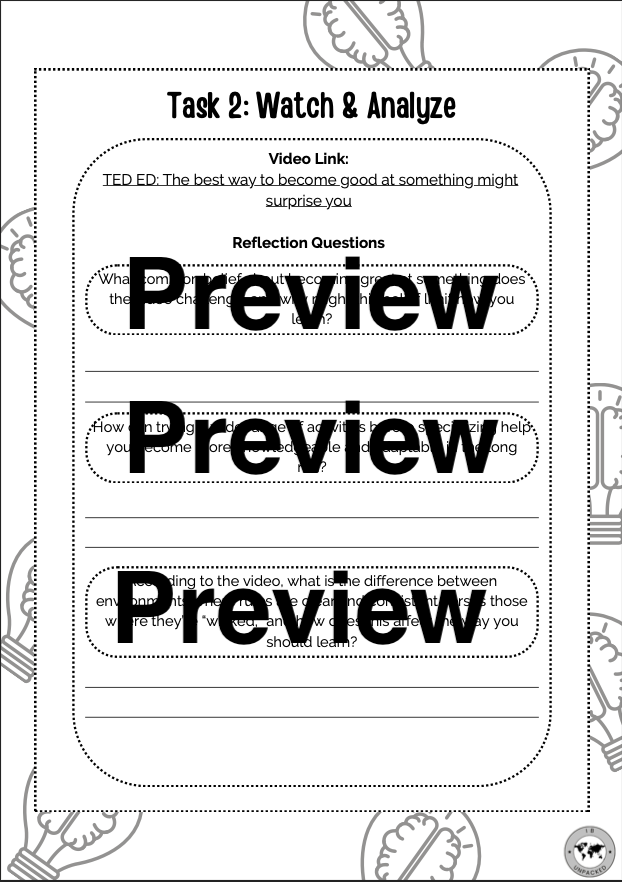
In Task 2, students watch a TED-Ed video about how people become good at things, challenging the idea that early specialization is always best.
Through guided reflection questions, they explore:
why trying many things builds deeper understanding
how different learning environments affect growth
how curiosity makes learners more adaptable over time
This ties beautifully into the Learner Profile and shows students that being knowledgeable is a lifelong process.
Connect knowledge to real-world issues
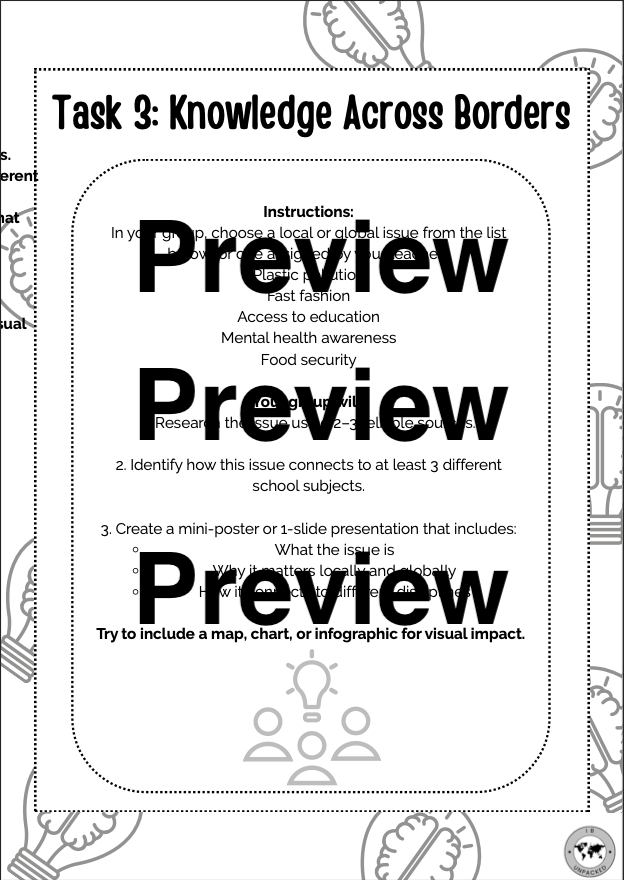
One of the strongest parts of this lesson is Knowledge Across Borders.
Students choose a real issue such as:
plastic pollution
fast fashion
access to education
mental health awareness
food security
They research it and link it to multiple subject areas, then create a mini-poster or slide showing:
what the issue is
why it matters locally and globally
how different disciplines help explain it
This is where learning becomes meaningful.
Students aren’t just gathering facts. They’re understanding complexity, impact, and global responsibility.
Reflect on why knowledge matters
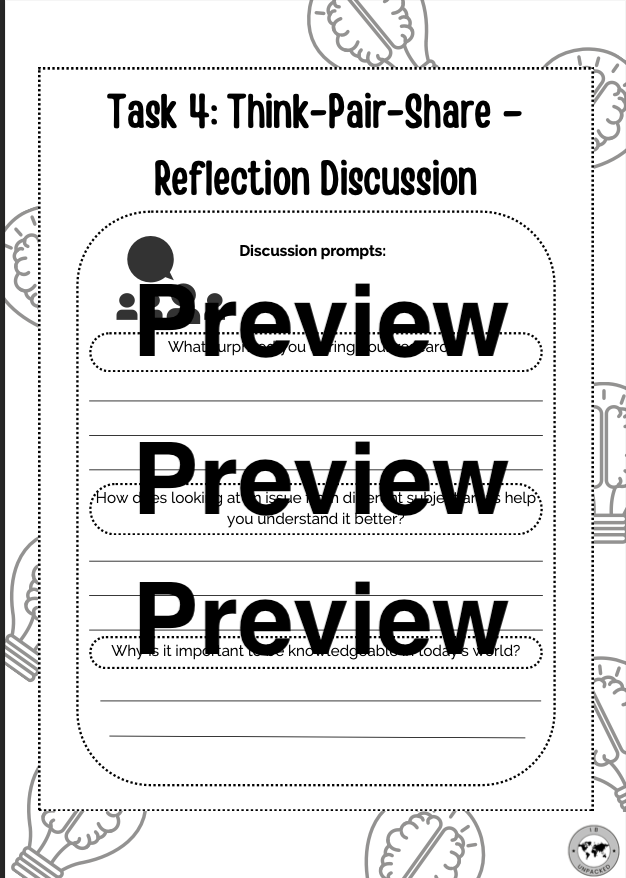
The Think-Pair-Share discussion prompts students to consider:
what surprised them during research
how interdisciplinary learning deepened understanding
why being knowledgeable is essential in today’s world
These conversations often lead to powerful insights about media literacy, global citizenship, and critical thinking.
Build lifelong learning habits
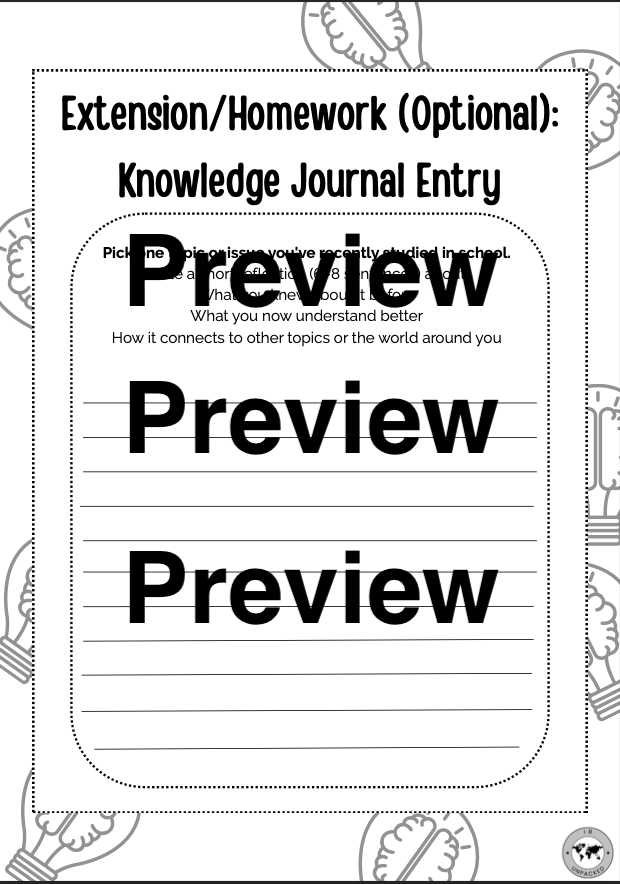
For extension or homework, students complete a Knowledge Journal Entry, reflecting on a topic they’ve studied and how it connects to the wider world and other subjects
This encourages metacognition, a core MYP skill.
End with self-assessment and goal setting
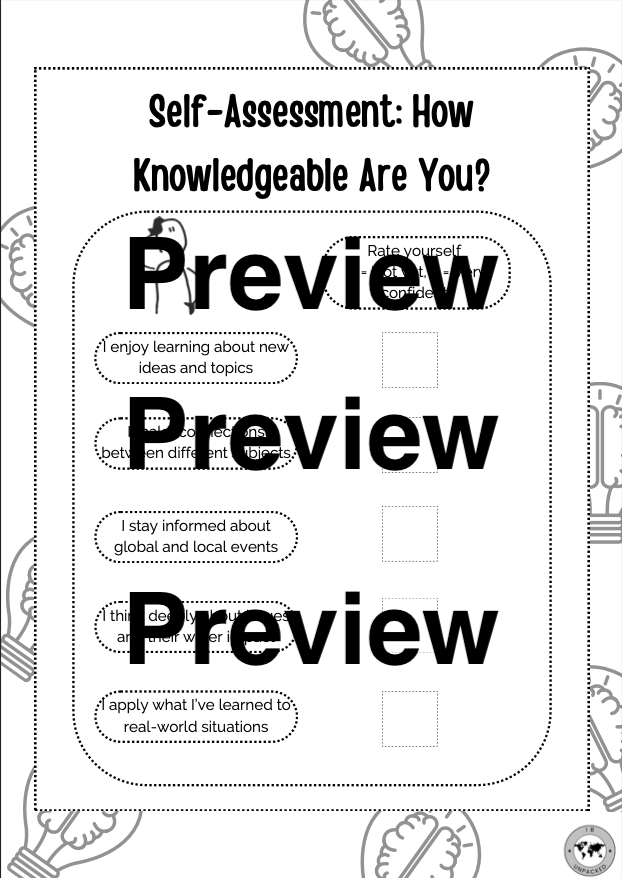
The lesson closes with a self-reflection checklist where students rate themselves on:
curiosity
making connections across subjects
staying informed about global issues
applying learning to real life
It turns “knowledgeable” into an ongoing learning goal rather than a one-time lesson.
Want to use this lesson with your students?
This resource is ideal for:
MYP advisory and homeroom
ATL skills development
interdisciplinary units
global issues projects
Learner Profile focus weeks
It helps students:
- connect subjects meaningfully
- think globally and critically
- see learning as purposeful
- become curious, informed learners
You can also purchase lessons for the other 9 Learner Profile traits, as well as a flashcards, MYP-friendly coloring, and a dice game here: